Bridge Council Meeting Set For Superior Region
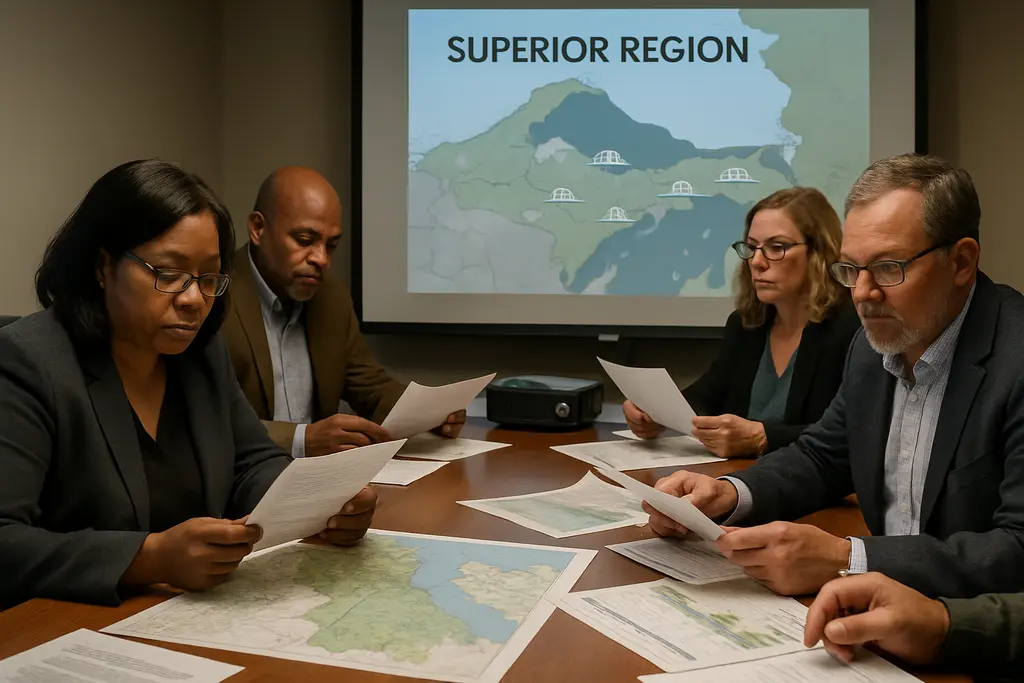
The Bridge Council Meeting scheduled for September 25, 2026, in Ishpeming gives local road agencies and residents in Michigan’s Superior Region a public setting to track bridge priorities, funding pressure, and repair needs. The meeting is set for 8:30 a.m. to 11:30 a.m. at the Marquette County Road Commission, 1610 N. Second Street, according to the MDOT meeting notice.
The notice places the meeting in a civic process that matters to county road commissions, township officials, freight users, emergency services, school transportation, and residents who rely on smaller local bridges. The public may attend, and the notice says each public comment speaker will have three minutes. The same notice says accessibility accommodations had to be requested at least five business days before the meeting, a deadline that appears to have passed as of September 21, 2026.
For readers interested in related community developments across Michigan, additional information can be found on the Saint Joseph Detroit website, which offers broad coverage within the network.
What The Bridge Council Meeting Covers
Bridge Council Meeting Details For The Public
The posted event notice identifies the meeting time, location, public comment limit, and contact information tied to Michigan DOT. It lists Keith Cooper, P.E., as a non-voting member with contact information through the department. The research available for this report does not include a full line-by-line agenda for the September 25 meeting, so specific bridge-by-bridge discussion items cannot be confirmed here.
Even without a published agenda in the material reviewed, the meeting fits within the work of Regional Bridge Councils that review local bridge needs under Michigan’s Local Bridge Program. That program helps direct state and federal support toward replacement, rehabilitation, and preventive maintenance. In practical terms, these meetings can affect when a township or county bridge moves from a planned need to a funded project.
Why Public Comment May Matter
For residents, the three-minute comment period is a limited but formal opportunity to put concerns on the record. Comments may focus on bridge condition, detour impacts, farm access, business access, school bus routing, emergency response, or the need for clear communication during construction. The council is not described in the notice as a city council or county board, so public comment should be understood as input into a regional transportation review setting rather than a local ordinance hearing.
For county road agencies, the Bridge Council Meeting also serves as a venue connected to project timing and public accountability. Local bridges are often less visible than major state highway work, but a closed or weight-restricted bridge can shift traffic onto longer routes and raise costs for public services and private operators.
Local Bridge Work In The Superior Region
Projects Listed Across Several Counties
The MDOT Local Bridge Program’s three-year plan for fiscal years 2026 through 2028 includes many Superior Region structures marked for replacement, rehabilitation, or preventive maintenance. The counties named in the research include Delta, Ontonagon, Baraga, Menominee, Chippewa, Marquette, Luce, and Dickinson. That spread shows the issue is not limited to one road commission or one corridor.
Project costs vary widely by structure, location, and type of work. In fiscal year 2026, the replacement of the bridge over the Middle Branch Ontonagon River, Structure 8515 in Ontonagon County, is estimated at $1,610,000. Preventive maintenance on Trout Lake Road, also known as H-40, is budgeted at about $377,000 for each listed structure. Other 2026 projects in the plan range from about $45,000 to more than $1.6 million.
Those differences are significant for local budgets. Preventive maintenance can be far less costly than full replacement, but it must be scheduled before a structure deteriorates beyond the point where preservation is enough. Replacement projects, by contrast, can require more design work, longer closures or detours, and larger funding commitments.
What The Numbers Say About Conditions
Michigan bridge conditions are under pressure statewide. The Michigan Auditor General reported that bridge conditions across Michigan declined by 6 percent between calendar years 2021 and 2024, pointing to a growing need for funding and intervention to avoid further deterioration, according to the state audit report.
The research reviewed for this article also notes that the share of Michigan bridges rated in good condition is declining, while fair and poor ratings are rising. The poor category was about 7 percent in 2024 and is projected in the research to rise to the 8 percent to 11 percent range in future years. For locally owned bridges, about 14 percent of Michigan’s 6,756 local bridges are listed as poor or severe condition. Southeast Michigan’s local bridge share is noted at about 17 percent, but the Superior Region’s project list shows that bridge condition concerns are also a northern Michigan issue.
Funding remains a central question. The research says Michigan’s Local Bridge Program generally distributes about $50 million each year in federal and state funds for local bridge work, with legislative supplements when available. The Transportation Asset Management Council estimate cited in the research says an added $189.5 million per year would be needed across local bridge agencies statewide to maintain a 95 percent good-or-fair target.
Local Impacts For Roads, Services, And Budgets

How Bridge Decisions Reach Daily Travel
Bridge work can affect residents long before construction starts. If a structure receives a lower condition rating or a weight limit, road agencies may need to reroute trucks, buses, plow routes, or emergency vehicles. In rural counties, a single bridge can connect residents to work, medical appointments, schools, and supply routes. That is why timing decisions made through regional review can matter to households that may never attend a transportation meeting.
Public agencies also face tradeoffs. A small preventive maintenance project may keep a structure in service longer, but replacement may be needed when deterioration is too far advanced. The three-year plan’s range of project costs reflects those tradeoffs. A $45,000 preservation item and a $1.6 million replacement can both be necessary, but they place very different demands on available funds.
Questions For Local Stakeholders
Residents and local officials who follow the September 25 meeting may want to watch for several basic points: whether any project timing changes are discussed, whether cost estimates have shifted, whether local matching funds are a barrier, and whether detours or access issues are being reviewed. The available research does not confirm which individual structures will be discussed at the meeting, so those details should come from MDOT or the council record after the meeting.
- Meeting date and time: September 25, 2026, from 8:30 a.m. to 11:30 a.m.
- Location: Marquette County Road Commission, 1610 N. Second Street, Ishpeming.
- Public comment: three minutes per speaker, according to the MDOT notice.
- Known program scope: replacement, rehabilitation, and preventive maintenance in multiple Superior Region counties.
Resident Questions For The Bridge Council Meeting
The Bridge Council Meeting gives the Superior Region a public checkpoint for a set of infrastructure issues that often move slowly but carry real local costs. The most useful next civic step is to verify the meeting record, any posted materials, and any project-specific updates after September 25, 2026. Residents affected by a listed bridge should look for confirmed agency documents before making plans around closure timing, detours, or construction schedules.
For local governments, the meeting is another point in a longer funding process. The figures in the research show that the need is larger than any single meeting: bridge conditions have declined statewide, local bridge needs remain high, and the Superior Region has projects ranging from relatively small preservation work to major replacements. What happens in Ishpeming will not settle every bridge issue, but it can clarify which projects are moving, which questions remain open, and how residents can follow the public record.