Line 5 Tunnel Faces EGLE Review After Ruling
The Line 5 Tunnel remained in a legal holding pattern as of September 19, 2026, after two major state actions moved in different directions: EGLE reissued resource permits on July 15, and the Michigan Supreme Court vacated the Public Service Commission’s earlier approval on July 31. For communities near the Straits of Mackinac, the practical question is not only whether the project can proceed, but which state review standards will govern any next step.
What Changed For The Line 5 Tunnel
Why The Line 5 Tunnel Permit Still Matters
The Line 5 Tunnel remains tied to several layers of state review. On July 15, 2026, the Michigan Department of Environment, Great Lakes, and Energy reissued its resource permit for the Great Lakes Tunnel Project, which was proposed to house a replacement segment for the existing 73-year-old Line 5 dual pipelines on the lakebed under the Straits of Mackinac, according to EGLE’s July 15 permit announcement.
That permit action did not settle the project’s legal status. On July 31, 2026, the Michigan Supreme Court issued its decision in In re Application of Enbridge Energy to Replace and Relocate Line 5, vacating the Michigan Public Service Commission’s approval of the project. The Court found that the PSC’s review under the Michigan Environmental Protection Act did not adequately address whether the tunnel would extend the operating life of Line 5, whether alternatives were compared fairly, and how public trust resources would be affected, as stated in the Michigan Supreme Court decision.
What The Supreme Court Did Not Do
The ruling did not directly revoke EGLE’s July 15 resource permits. That distinction matters for residents, local governments, Tribal Nations, and businesses tracking what can happen at the Straits. The PSC approval and EGLE permits came from separate processes, so the Court’s action against the PSC order left a different legal question: whether EGLE’s permit record can stand under the new direction from the Court.
After the Court’s ruling, state officials said EGLE had to consider how the decision affected permits issued in July. The September 9 state statement described the permit as possibly needing further review through the legal process. It also said current permit conditions prevented construction of the tunnel entrance from moving forward while outstanding legal questions remained unresolved.
Legal Questions Around The Line 5 Tunnel
MEPA Review Is Now Central
For the Line 5 Tunnel, the Michigan Environmental Protection Act is now at the center of the dispute. The Court’s decision focused on the scope of environmental review. Its findings pointed to three gaps in the PSC analysis: the potential extension of Line 5’s operating life, comparison of alternatives, and effects on public trust resources. Those are not abstract issues for the Straits region. They connect directly to Great Lakes water, shoreline communities, tribal treaty interests, emergency planning, and long-term infrastructure policy.
EGLE’s July 15 action was based on a separate record. The agency said its staff reviewed public and private need and concluded that need outweighed other public interest criteria. The review included a 16-month process, more than 70,000 public comments, consultation with tribal nations, meetings with state heritage and natural resources agencies, and input from an independent engineering firm. Those facts show the scale of the state record, but they do not end the debate over how the Supreme Court’s July 31 decision should apply to EGLE’s permit.
Permit Status And Construction Limits
As of September 19, 2026, the key civic point is that the EGLE permit remained in effect, but construction of the tunnel entrance was not moving forward under current permit conditions. That creates a narrow but important difference for the public: the permit had not been set aside by the Court, yet the project did not have a clear path to physical work at the entrance while legal review questions were pending.
Environmental and tribal groups filed a petition with EGLE on September 10, 2026, asking for a contested-case hearing to reverse the July 15 water resource permit. Their argument, as summarized in the research record, was that the permit violated MEPA and the public trust doctrine under the Supreme Court’s new interpretation. EGLE had not completed that contested-case process as of September 19, 2026, based on the information provided.
EGLE’s July Permit And The Public Record
What EGLE Said It Reviewed
EGLE’s July permit record is significant because it shows the agency did not issue a short or routine approval. The staff review described a long comment period and broad participation. The agency considered cultural and environmental impacts, public and private need, alternatives, tribal consultation, natural resources input, and engineering review. Those elements are likely to be central if a contested-case hearing or court review tests whether EGLE’s permit satisfies the standards now emphasized by the Michigan Supreme Court.
The difference between a permit record and a court-approved record is also important. EGLE can point to the scope of its review. Opponents can point to the Court’s findings that the PSC review was too narrow. The next step is not a public vote or a new policy announcement; it is a legal and administrative process that may determine whether EGLE’s resource permit needs revision, reversal, or added analysis.
Why The NPDES Process Matters Locally
The research record also notes a separate draft National Pollutant Discharge Elimination System permit. EGLE opened public comment from May 19 through June 30, 2026, and held a virtual public meeting and hearing on June 18 to collect input on treated wastewater tied to construction and operation of the proposed tunnel. That part of the record matters to communities because water-discharge conditions are not only technical terms. They can shape public confidence in how construction impacts would be controlled if the project ever reached that stage.
For local readers trying to follow the issue, the strongest dividing line is between what has already happened and what remains unresolved. EGLE reissued resource permits on July 15. The Supreme Court vacated the PSC approval on July 31. State officials acknowledged on September 9 that EGLE must consider the effect of the ruling. A petition for a contested-case hearing was filed on September 10. Construction of the tunnel entrance was still blocked by permit conditions as of September 19.
Local Stakes For Straits Communities
Residents Need Clear Process, Not Mixed Signals
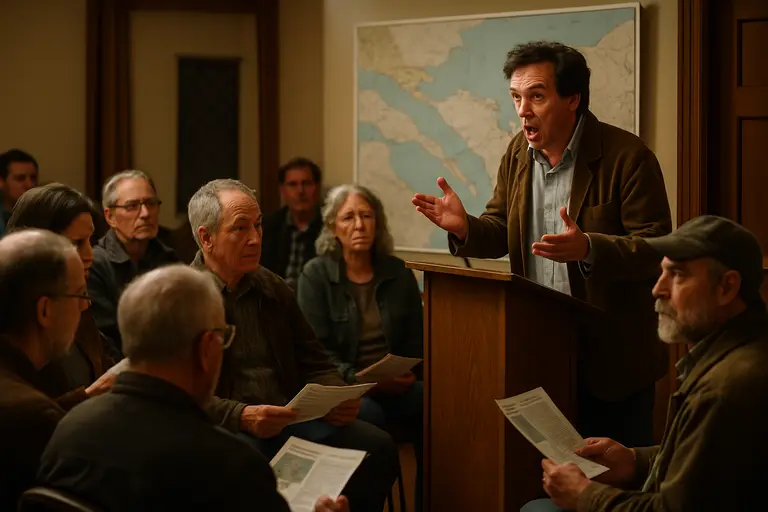
The communities closest to the Straits have a direct interest in clear public information. The project touches water protection, energy infrastructure, tribal consultation, state permitting, and local emergency planning. Mixed messages can leave residents unsure whether approval has been granted, whether construction can begin, or whether the project is paused by legal limits. The most accurate reading is more specific: one state permit remained active, one PSC approval was vacated, and construction at the tunnel entrance was precluded under permit conditions while legal questions remained open.
That distinction affects county and municipal planning. Local officials may need to respond to questions about roads, staging, public safety coordination, or emergency services, but the research record does not support any claim that new construction activity was authorized after the Supreme Court decision. Local governments and civic groups should be working from dated state records rather than political claims or secondhand summaries. For broader community and business context in the same regional network, readers can also explore related organizations at the Richland Chamber.
Business, Tribal, And Public Trust Interests
Business stakeholders often seek timeline certainty, while Tribal Nations and environmental organizations have focused on treaty interests, public trust resources, and Great Lakes protection. Those interests are not identical, but each depends on a transparent process. A permit that remains legally uncertain can affect planning even before any construction begins. For a small business, that may mean uncertainty over future traffic, supply needs, or public spending. For Tribal governments, it may mean continued attention to consultation and treaty-protected resources. For shoreline residents, it may mean close tracking of water and emergency response protections.
Readers who want background on how the state review was reopened can read related coverage of state permit review. The practical takeaway is that the project’s future rests less on a single announcement and more on how EGLE, courts, and any contested-case process apply the Supreme Court’s July 31 reasoning to the July 15 permits.
Line 5 Tunnel Civic Stakes In The Straits
The next civic step was not construction as of September 19, 2026. It was legal review of how the Supreme Court decision affects EGLE’s permit record. That may include a contested-case process, further agency action, or additional court review. The available record supports a careful reading: EGLE’s resource permit was still in effect, the PSC approval had been vacated, and permit conditions prevented tunnel entrance construction from proceeding while unresolved legal issues remained.
For Michigan communities, the issue is larger than a permit file. It is about how the state balances infrastructure decisions with Great Lakes protection, tribal consultation, public trust duties, and clear local information. The Straits are a shared public resource and a regional identity marker. The decision-making process now needs to be precise, public, and tied to the standards set by the Court, because residents deserve to know not only what was approved, but what is legally allowed to happen next.