Michigan City Roads Funding: What Residents Know
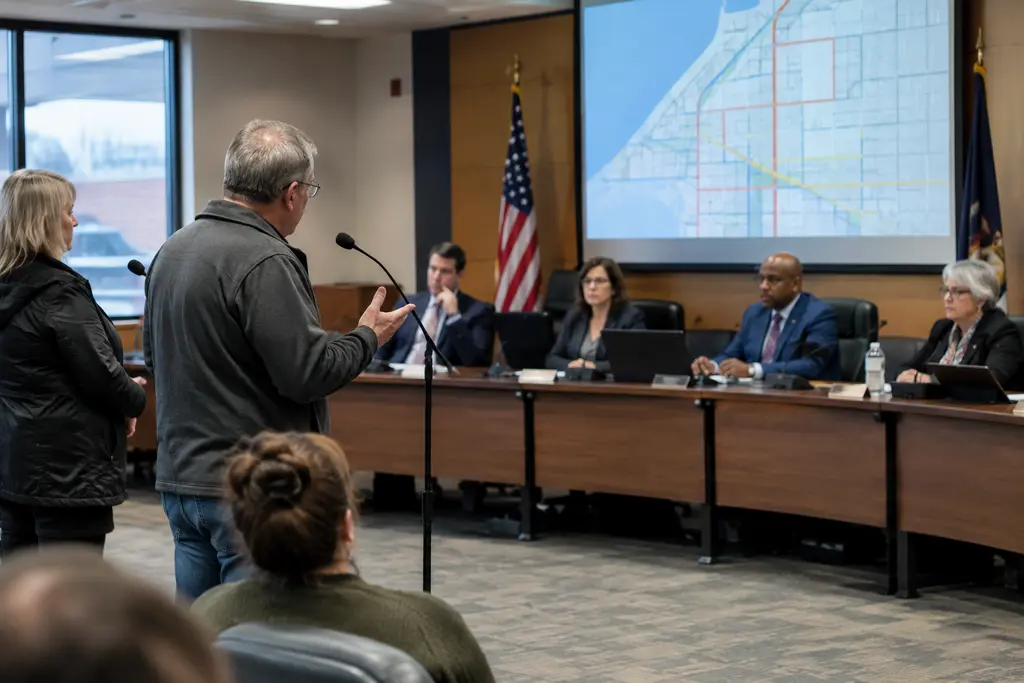
Michigan City roads are back in the public record through a Common Council action tied to state matching-grant funding, but the available documents support a narrower reading than a single, confirmed “major roads reconstruction” vote. The clearest record shows that the Michigan City Common Council passed a resolution on October 16, 2025 approving submission of an application to the Indiana Department of Transportation’s 2026 Community Crossings Matching Grant Program, seeking up to $1,000,000 for street-paving projects.
For residents, the practical point is this: the council action helped position the city to seek state support for pavement work, while local funding was identified to meet the required match. The record provided does not, by itself, confirm one bundled reconstruction plan with a full street list, construction calendar, or traffic-control schedule. That distinction matters for homeowners, commuters, school families, delivery drivers, and nearby businesses trying to plan around road work.
What The Council Approved For Michigan City Roads
Michigan City Roads Funding Record
The public record for Michigan City roads shows council action on an application, not a final construction contract. The October 2025 council agenda packet states that the council passed a resolution on October 16, 2025 approving submission of an application for the 2026 Community Crossings Matching Grant Program through INDOT, with the city seeking up to $1,000,000 in grant funds for various street-paving projects through the Common Council agenda packet.
The same agenda packet said the grant required a dollar-for-dollar local match. It also identified $400,000 from the 2025 Motor Vehicle Highway Restricted fund and $600,000 from Tax Increment Financing through the Michigan City Redevelopment Commission to cover that local share. In plain terms, the city’s application was structured around both road-related local revenue and redevelopment funding, which can be a key point for residents who want to understand where the match would come from.
What The Vote Did Not Confirm
The record available here does not show a single Common Council approval of a fully scoped “major roads reconstruction” package. It does not provide a final list of streets, lane closures, bid tabs, contractor names, or start and end dates for construction. That does not mean street work did not move forward through later city actions; it means those details are not established by the cited council packet alone.
For local readers, the difference between a grant application and a construction approval is practical. A grant application can start the funding process, while a later public works action, contract award, or payment approval may be needed before crews are scheduled on specific streets. Residents should treat the October 2025 action as a funding step unless the city publishes later records that identify the exact work locations and schedule.
How The State Grant Process Affects Residents
Application Window And Local Match
The council packet reported that the 2026 Community Crossings Matching Grant application period opened on October 1, 2025 at 8:00 a.m. Eastern time and closed on October 31, 2025 at 5:00 p.m. Eastern time. That timeline helps explain why the council action was taken in October 2025: the city had to authorize the application while the state window was open.
For Michigan City roads, that timing matters because local funding decisions often need to happen before residents see construction signs. A city may need to identify match dollars, file the application, wait for grant review, and then move through design, bidding, contract approval, or scheduling steps. Each of those steps can affect when residents see work on a block, corridor, or neighborhood street.
Why Residents Should Watch Later Agendas
The most useful follow-up records for residents are usually Board of Public Works and Safety agendas, Common Council agendas, Redevelopment Commission actions, bid notices, and street department updates. Those documents are where a broad funding decision may turn into a street-by-street work plan. Residents may want to check whether later records identify pavement limits, curb or drainage work, driveway access impacts, trash pickup changes, school-route issues, or detour plans.
Residents can also compare local road actions with regional civic reporting. For readers interested in broader county-level issues, County Watchers is a related site in the same network that tracks local government matters with a practical public-records focus.
What Prior Awards Show About Road Funding
Michigan City’s 2024 Award
Michigan City has received notable Community Crossings support before. In the 2024 grant cycle, Michigan City received $1,460,881.86 through INDOT’s Community Crossings Matching Grant program, according to Lakeshore Public Media’s report on Northwest Indiana awards. That report placed Michigan City among Northwest Indiana communities receiving Community Crossings grants for road projects.
The 2024 award is relevant because it shows the city had already been part of the state matching-grant pipeline before the 2026 application action. It does not prove that every later project was approved in the same way, and it does not replace the need for current city documents. Still, it gives residents useful context: Community Crossings has been a recurring source of road funding for communities in the region, including Michigan City.
How To Read Grant Amounts Carefully
Grant amounts can be easy to misunderstand. A requested amount is not the same as an awarded amount. An awarded amount is not always the same as the final construction cost. A council resolution approving an application is not the same as a completed project. Residents tracking Michigan City roads should keep those categories separate when reading agendas or public notices.
The October 2025 record says the city sought up to $1,000,000 for various street-paving projects and identified local match funding. That is the supported fact. Any claim about exact construction streets, final project price, contractor selection, or completion status would need a separate official record tied to those details.
What Residents Should Check Before Road Work Starts
Questions For City Records
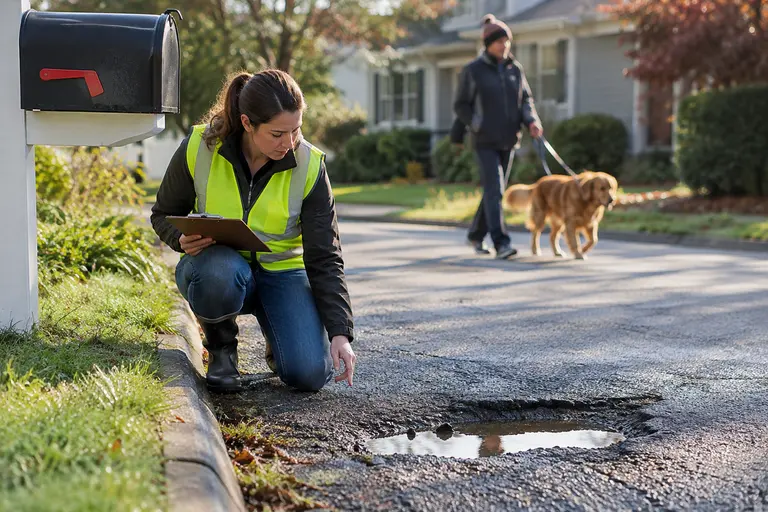
Before assuming a nearby street is part of the funded work, residents can look for records that answer basic questions. Is the street named in an approved project list? Has a contractor been selected? Did the Board of Public Works and Safety approve a contract or payment? Are there notices about parking limits, driveway closures, bus route changes, or refuse collection? These are the details that affect daily routines more than the grant resolution itself.
Business owners may also want to watch for driveway access plans and delivery windows if work is scheduled near commercial properties. Families may want to check school travel routes. Older adults and residents with mobility needs may need earlier notice if sidewalks, crossings, or curb areas are affected. None of those impacts should be assumed from the grant application alone, but they are reasonable items to monitor once a project list is released.
- Check Common Council and Board of Public Works agendas for contract, payment, or change-order items.
- Look for official street lists before assuming a road is included.
- Separate grant applications from grant awards and construction approvals.
- Watch for notices about parking, access, detours, and trash collection.
- Ask the city which department is handling resident questions for a specific street.
Michigan City Roads Resident Checklist
The safest reading of the public record is that the Common Council approved a grant-application step for Michigan City roads, backed by identified local match funds, rather than one fully documented reconstruction package in the materials cited here. The work may still be significant for residents if later records assign the money to specific streets, but those details need to be confirmed through city documents.
Residents who want to stay prepared should track official agendas, read attachments rather than only meeting titles, and note the difference between requested funding and approved construction. That approach will give households and businesses the clearest picture of when road work may affect travel, parking, access, and neighborhood routines.