RenCen CBO: What Detroit Residents Want Now
RenCen CBO discussions have put Detroit residents at the center of one of the city’s most watched redevelopment reviews as of Oct. 8, 2026. The Renaissance Center and East Riverfront proposal is moving through Detroit’s Community Benefits Ordinance process because it qualifies as a Tier 1 project, according to the city’s project page for the Renaissance Center and East Riverfront projects. For residents, the main questions are direct: who benefits, who gets heard, and how much of the riverfront’s future will remain accessible to Detroiters?
What RenCen CBO Covers
The redevelopment proposal is large enough to affect far more than the buildings themselves. The city describes a plan that includes 934 new mixed-income residential units, more than 470,000 square feet of retail, entertainment, dining and recreation space, a renewed 858-room hotel, and about 17 acres of new civic space, including parks, plazas, waterfront greens and a new marina. Those details explain why the public review has drawn attention beyond the immediate census tracts around the site.
Detroit’s Community Benefits Ordinance is designed to create a formal public process around major projects that receive public support or meet certain development thresholds. In this case, residents have used the process to raise concerns about housing affordability, local hiring, public access, transit, preservation, and whether the official impact area is too narrow for a project tied to one of Detroit’s best-known downtown landmarks.
Project Scale And Public Space
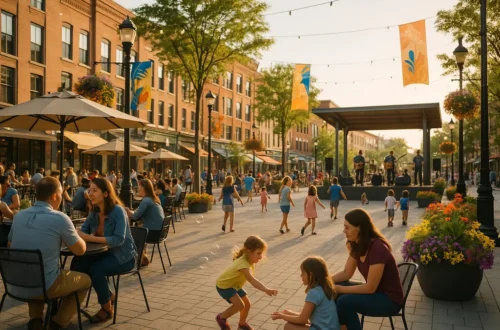
The civic space proposal has become one of the most visible parts of the discussion. Parks, plazas, waterfront greens and a marina could change how residents and visitors move along the East Riverfront. The public benefit question is whether those spaces will feel open and usable for Detroit neighborhoods, not only for office workers, hotel guests or new residents in the development.
Public space also carries a maintenance and access question. Residents will want clear answers on whether the proposed areas will be publicly accessible, how they will connect to existing riverfront paths, and how programming or security rules could affect daily use. Those details matter because a new plaza or waterfront green is not automatically a community benefit unless residents can reach it, use it and feel welcome there.
RenCen CBO Timeline Questions
The first public CBO meeting for the project took place on Aug. 18, 2026. Axios Detroit reported that residents questioned an approximately 11-week process and raised concerns that the impact area, covering roughly 4,600 residents, was too small for a project with citywide significance, according to Axios Detroit’s coverage. That timeline concern is central because residents are being asked to review a complicated redevelopment proposal with housing, public space, demolition, financing and long-term access questions all tied together.
A narrow timeline can affect participation. Residents who work nights, care for family members, rely on transit or need translated materials may have fewer chances to take part if meetings are limited or poorly publicized. A narrow impact area can also leave out Detroiters who see the RenCen as a civic asset, even if they do not live in the official review boundary.
What Residents Want From The Project
The RenCen CBO debate is not only about design. It is about whether redevelopment commitments match the needs residents described during the public process. The demands reported in local coverage and public discussion point to several recurring themes: affordable housing, Detroit-based hiring, small business access, transit, preservation and a broader public voice.
- Affordable housing: Residents want “affordable” to reflect the incomes of low- and moderate-income Detroiters, not only regional averages that may price out current residents.
- Local jobs: Residents have asked for stronger Detroit hiring commitments tied to construction and future operations.
- Black-owned small business access: Community members have called for business opportunities that reach local entrepreneurs, not only large tenants.
- Transit benefits: Residents have raised public transportation as a benefit that should be part of the plan.
- Preservation concerns: Some residents objected to the proposed removal or “strategic deconstruction” of two of the five original RenCen towers.
Those requests share a common thread: residents are asking for benefits that can be measured and enforced. A pledge to support local hiring, for example, is stronger if it includes goals, reporting, and consequences for missed targets. The same is true for small business participation and housing affordability. Without clear terms, community benefits can become public-facing promises that are difficult to track.
Housing Affordability And Who Can Stay
Housing is one of the most sensitive pieces of the redevelopment because the plan includes 934 mixed-income units. Residents have questioned whether the affordability definitions will reach households already under pressure from rent and other housing costs. That concern is especially important in a downtown and riverfront area where new investment can raise nearby market expectations.
A fair RenCen CBO housing discussion should define income levels in plain language. Residents need to know how many units would be income-restricted, what income bands would qualify, how long affordability would last, and whether any units would be available to very low-income households. The term “mixed-income” can mean different things depending on the financing and affordability rules attached to the units.
Jobs, Small Business And Transit
Economic opportunity is another major test for the project. Residents have called for more Detroiters to be hired and for Black-owned small businesses to benefit from the redevelopment. These requests connect the project’s public support discussion to daily household needs: wages, contracts, storefront access and long-term career paths.
Transit is also part of the resident conversation. A riverfront redevelopment can add housing, jobs and visitors, but those benefits are limited if workers and residents cannot reach the site without relying on a car. Transit-related benefits could include better connections to nearby service, safer pedestrian access, clearer links to existing mobility options, and planning that treats transportation as a public need rather than an afterthought.
Why The Public Review Matters

The CBO process is the main public forum where residents can press for specific commitments before major approvals and agreements are completed. That makes the structure of the process important. Who receives notices, where meetings are held, how feedback is recorded, and whether resident concerns appear in final agreements all shape the public value of the review.
For readers tracking the financing side of the project, our earlier coverage of the RenCen redevelopment funding review placed the public-support discussion in the broader civic process. The key local issue is not only the size of any public support package, but the conditions attached to it and whether those conditions are visible to residents.
Detroit residents have also questioned the scale of the official impact area. That issue is practical, not symbolic. If the impact area is small, fewer residents have a direct formal channel in parts of the process. Yet the RenCen sits in a location that many Detroiters associate with the city’s skyline, riverfront identity and downtown economy. That mismatch helps explain why the public conversation has stretched beyond the mapped boundary.
Public Outreach And Trust
Trust depends on whether residents believe the process can change outcomes. If engagement is limited to brief presentations after major decisions are already shaped, residents may see the CBO as procedural rather than meaningful. If the process records concerns, negotiates clear commitments and reports back in plain language, it can give residents a stronger public record.
For those interested in how public engagement works in different places, the Houston LWS Forum illustrates another approach to maintaining close connections with local issues. Detroit’s system will naturally reflect its own local governance and community needs.
RenCen CBO Choices For Detroit Residents
For residents, the RenCen CBO process comes down to whether the final community benefits reflect the concerns raised in public: housing people can afford, jobs Detroiters can access, business opportunities for local owners, transit connections, meaningful public space and a review process that does not feel rushed.
The project’s scale gives the city, developers and residents a chance to set clear expectations for how major riverfront redevelopment should work. As of Oct. 8, 2026, the public record shows that residents are not simply asking for general support. They are asking for commitments that can be written down, tracked and tied to the public value of the project.
That is the civic importance of this review. The RenCen is not just a private redevelopment site; it is part of the downtown and riverfront experience shared by Detroit residents across neighborhoods. The strongest outcome would be one where the community benefits are specific enough for residents to understand, public enough for them to monitor, and strong enough to matter after construction plans move forward.