Three Rivers public input Shapes Imagine2040
How Three Rivers public input Is Being Collected
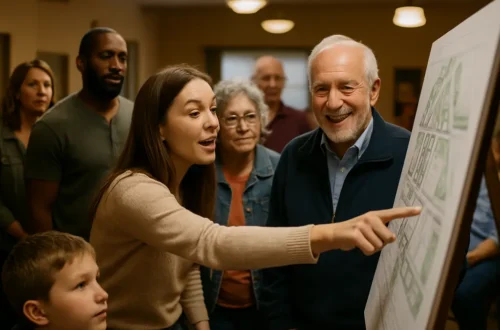
Three Rivers public input is being gathered through a mix of in-person meetings, online tools, and civic participation options tied to the city’s Comprehensive Master Plan update, known as WeAreTR: Imagine2040. In early 2025, the Three Rivers Downtown Development Authority and City Planning Commission co-hosted a community engagement event and informational workshop on the Master Plan and Imagine2040 effort, according to the city’s community engagement page. For residents, business owners, neighborhood groups, and other stakeholders, the key change is that the city is offering more than one way to respond, rather than relying only on attendance at a public meeting.
Why Three Rivers public input Matters For Imagine2040
The Master Plan update is intended to guide city-wide policy and future decisions for land use, transportation, neighborhoods, parks, infrastructure, and downtown development. That gives the process a direct connection to daily life in Three Rivers. Comments about a street, a park, a housing area, or a downtown block may not create an immediate project, but they can help shape the priorities city officials and planning bodies use when reviewing future proposals.
The city’s approach also reflects its status as a Redevelopment Ready Community recognized by the Michigan Economic Development Corporation. Under that program, the city follows public participation practices that call for community involvement in decision-making. The practical result is a planning process that asks residents to do more than react after a decision is made. It gives them ways to identify needs, rank goals, and point to specific places where city planning should focus attention.
Public Meetings And Workshops
Public meetings and workshops remain one of the most direct ways for residents to hear what is being proposed and ask questions before plans are finalized. The early 2025 workshop connected the Downtown Development Authority, the City Planning Commission, and residents around the same planning table. That is especially relevant for a Master Plan that includes downtown development along with broader topics such as transportation, parks, infrastructure, and neighborhoods.
For many residents, a workshop format can be more useful than a standard meeting agenda. It can allow people to review materials, talk through ideas, and understand how one issue connects to another. For example, a comment about a sidewalk can relate to transportation, neighborhood access, downtown activity, and park use. The Master Plan process gives the city a place to sort those connected concerns.
Online Tools Expand Public Access
Not every resident can attend a meeting because of work schedules, caregiving responsibilities, transportation barriers, or timing. The city’s online Community Input Survey gives those residents another path to participate. The survey allows individuals to submit ideas and rank goals for city development. That matters because planning meetings often draw people who already follow city issues closely, while online tools can collect input from people who may care deeply about a street, park, or service but cannot be present at City Hall or a public workshop.
Community Input Survey
The Community Input Survey gives residents a structured way to respond to planning questions. Rather than offering only open-ended comments, the survey also allows people to rank goals. That kind of feedback can help city officials see where priorities may be shared across different neighborhoods or interest groups. It can also show where opinions differ, which is useful for a planning process that must balance limited resources and competing needs.
Three Rivers public input gathered through the survey should be read as one part of the broader planning record. A survey does not replace a public meeting, a formal Planning Commission review, or City Commission action. It does, however, make the planning process more accessible for residents who might otherwise be absent from the discussion. The strongest local planning efforts usually combine formal public review with lower-barrier participation options, and Three Rivers is using that model in the Imagine2040 process.
Map-Based Feedback
The city also offers map-based feedback so residents can comment on specific geographic areas. This is a practical tool for local planning because many concerns are place-based. A resident may want to identify a park that needs attention, a street segment that feels difficult to use, a downtown area that could benefit from investment, or a neighborhood connection that should be improved. A map lets residents connect their comments to a location rather than submitting broad statements that may be harder to apply.
Map-based input can be especially useful for topics included in the Master Plan, such as transportation, parks, neighborhoods, infrastructure, and downtown development. It can help planners see patterns. If multiple comments point to similar locations or similar issues, the city may have a clearer basis for studying those areas in future work. If comments are scattered, that can also be informative, showing that concerns may differ across the city.
Civic Participation Beyond Planning Meetings

The city’s engagement work is not limited to the Master Plan. Three Rivers also encourages residents to take part through volunteer opportunities, board vacancies, and Citizen Interest Forms. These options matter because civic engagement does not happen only during a planning update. A resident who volunteers in a park, applies for a board seat, or submits interest in public service can help shape community priorities over time.
Volunteer Programs And Adopt-A-Park
Volunteer opportunities listed by the city include programs such as Adopt-a-Park and participation in upcoming events. These roles can connect residents to visible public spaces and community activities. In a city planning context, volunteer work can also give residents firsthand knowledge about public needs. Someone who helps maintain or support a park may notice access issues, maintenance needs, or use patterns that can inform later comments on parks and recreation priorities.
Volunteer programs also help turn public input into shared responsibility. A city can plan, budget, and coordinate public services, but community participation can extend the reach of that work. That does not remove the city’s responsibility for public infrastructure or services. It does give residents a way to contribute to places they use and care about.
Boards, Vacancies, And Citizen Interest Forms
The city also invites residents to fill board vacancies and submit Citizen Interest Forms. Board service is one of the more formal ways to participate in local governance. While a survey can capture broad feedback, boards and commissions often review details, discuss tradeoffs, and make recommendations. Residents who want a continuing role in decision-making may find that a Citizen Interest Form is a direct step toward service.
Three Rivers public input through boards and commissions can also help connect planning work to public accountability. The Master Plan can set direction, but local boards often help carry that direction into specific discussions. Residents who serve in these roles may review development questions, public space concerns, or planning topics that affect how the city grows and maintains services.
What Residents Can Do Next With Three Rivers public input
Residents who want to participate in the Imagine2040 process have several supported options: attend public meetings or workshops when scheduled, review Master Plan drafts when available, use the Community Input Survey, submit map-based comments, consider volunteer roles, and apply for board service when vacancies are posted. Each option reaches a different part of the civic process. A survey can share priorities, a map can identify a location, a meeting can raise questions in public, and board service can provide longer-term involvement.
The city’s stated planning topics are broad, so residents may want to focus comments on specific experiences. A useful comment might identify a street, park, block, neighborhood, or service concern and explain how it affects daily life. For example, a resident could describe how a transportation connection affects access to downtown or how a park improvement could serve nearby neighborhoods. The more specific the feedback, the easier it may be for city staff and planning bodies to sort it into the Master Plan process.
Residents keen on tracking similar civic participation developments in surrounding areas should visit County Watchers for connected stories. For Three Rivers, the next civic step is continued public review as the city moves through the Imagine2040 planning process. Draft Master Plan materials are made available for review and comment, and community visioning is part of the city’s stated approach. Three Rivers public input will be most useful when it is timely, specific, and connected to the city topics already named in the Master Plan effort: land use, transportation, neighborhoods, parks, infrastructure, and downtown development.