Wildlife Crossing Grants: Local Application Guide
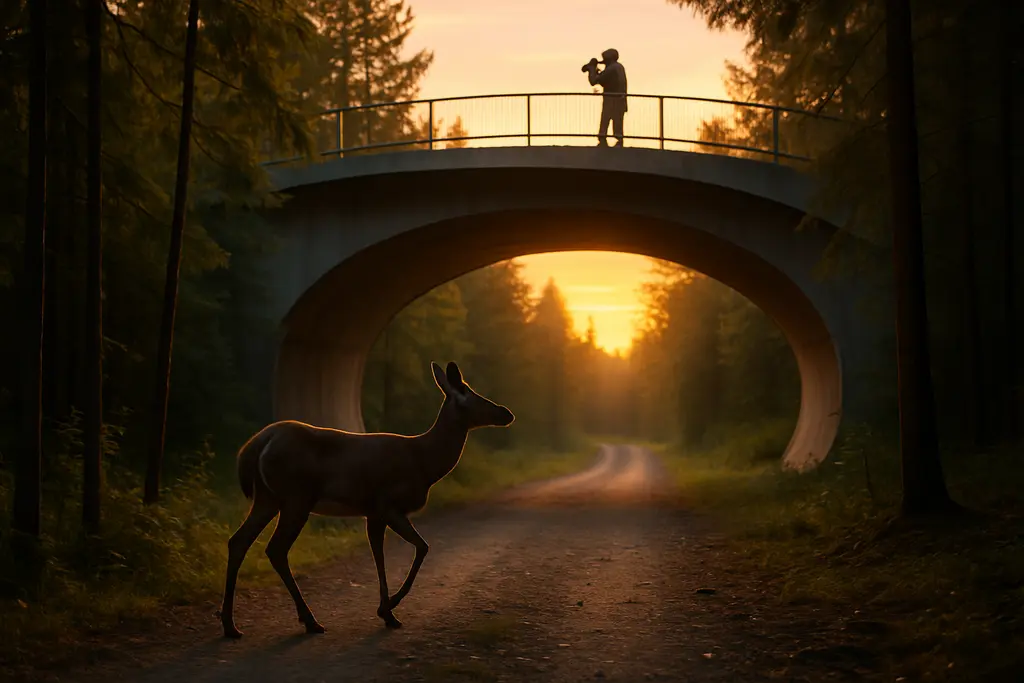
Wildlife Crossing Grants are now in an active federal application cycle, giving Michigan counties, cities, townships, metropolitan planning organizations and regional authorities a chance to seek funding for projects aimed at reducing wildlife-vehicle collisions. The current federal program is the Wildlife Crossings Pilot Program, a U.S. Department of Transportation effort that supports work to reduce crashes involving wildlife and improve habitat connectivity for terrestrial and aquatic species, according to the USDOT program page.
For local governments, the civic question is direct: which roads have documented crash problems, which public agencies own or manage those roads, and what application steps need to happen before the November federal deadline. The FY 2026 program is especially relevant for rural counties and smaller communities because at least 60% of funding each fiscal year must go to rural projects. That does not limit the program only to rural governments, but it does mean rural road corridors with clear safety and habitat concerns may fit a major program priority.
Wildlife Crossing Grants Open For FY 2026
Current Application Window And Deadline
The FY 2026 Wildlife Crossings Pilot Program application window opened on September 30, 2026, and applications are due by November 16, 2026, at 11:59 p.m. Eastern Time. As of October 12, 2026, that deadline had not yet passed, so local governments still had time to assemble crash data, maps, cost estimates, consultation records and governing-board approvals where required.
The federal opportunity listing states that the program can support both construction and non-construction projects. Eligible construction examples include wildlife underpasses, overpasses, fencing and habitat restoration. Eligible non-construction examples include planning studies, mapping tools, public outreach and safety innovation, according to the federal opportunity listing. For a county road agency or city public works department, that means the application does not have to begin with a shovel-ready bridge or culvert project. A planning application may be appropriate where a corridor has a known problem but still needs engineering, data review and agency coordination.
Who Can Apply For Wildlife Crossing Grants
Eligible applicants include state departments of transportation, local governments, metropolitan planning organizations, regional authorities, Indian tribes, Federal Land Management Agencies and groups made up of those entities. For Michigan communities, that eligibility structure means a county, city or regional planning body may be able to apply if the project meets federal requirements and the applicant can document the required coordination.
Projects led by eligible non-federal entities, other than Federal Land Management Agencies or tribes, must include documentation showing consultation with the state highway agency during application development. That requirement matters for local boards because it affects the schedule. A county commission, city council or township board should not wait until the final week to ask staff to contact the state highway agency, gather letters or confirm whether a corridor connects with state-managed transportation planning.
How Michigan Local Governments Can Shape A Project
Start With A Corridor, Not A General Idea
A competitive local application should start with a defined road segment or set of road segments. The research supporting this grant cycle points to the program’s purpose: reducing wildlife-vehicle collisions and improving habitat connectivity. A local government therefore needs more than a general concern about deer crashes or animal movement. It should identify the roadway, the safety issue, the public agency responsible for the corridor, and the proposed response.
For a Michigan county road commission or municipal public works office, the first local step is likely an internal review of crash records, maintenance records, road ownership and known crossing points. If the applicant is an MPO or regional authority, it may also need to work with member communities to decide which corridor has enough data and community value to justify an application. Wildlife Crossing Grants can fund planning work, so a local applicant does not need to claim that every design question has already been answered. The application should be clear about what is known, what remains uncertain and how the proposed grant work would resolve those issues.
Build The Local Record Before Filing
Local governments should also build a public record around the project. That may include a staff memo, a meeting agenda item, a resolution authorizing an application, or budget notes identifying the local match. The research indicates that a 20% non-federal cost share is required unless an exception applies. For a local board, that means the grant is not simply a request for free project funding. The applicant needs to show how the match will be covered, or whether a specific exception is relevant.
The record should also explain the public benefit in plain language. Wildlife-collision mitigation is a road safety matter, but it is also a public cost issue. National research cited in program materials describes more than 1,000,000 wildlife-vehicle collisions each year in the United States, with tens of thousands of serious injuries, hundreds of fatalities and more than $8 billion in estimated annual costs. Local applications should connect that broader problem to the specific local corridor without overstating what the applicant can prove.
Residents interested in closely monitoring county-level grant activity, road projects, and public spending can stay updated through County Watchers, a part of the same local-news network providing comprehensive coverage.
Funding Rules And Project Types
What The Federal Share Can Cover
For FY 2026, the Wildlife Crossings Pilot Program lists approximately $80 million in available funding. The program can support construction and non-construction work, which gives local governments more than one path. A rural county with a known high-collision corridor may pursue design and construction for fencing or a crossing structure. A regional authority with less complete data may apply for planning, mapping or public outreach to identify priority sites and prepare later capital work.
The research also notes that federal officials may prioritize construction-type projects. Local governments should read that carefully. It does not mean planning applications are barred. It does mean that a planning proposal should be tightly written, tied to a defined road problem and clear about how the work could lead to future safety improvements. Wildlife Crossing Grants are competitive, so a vague request for general study funds is less likely to serve residents than a focused request tied to a documented corridor.
Local Match And Rural Set-Aside
The standard match requirement is a 20% non-federal share unless an exception applies. Federal Land Management Agencies and tribes may be able to use certain federal funds for match, based on the program information. For a city, county or MPO, finance staff should identify the proposed source of the local share before the governing body authorizes an application. Possible local sources will depend on each community’s own budget rules and funding restrictions, so applicants should not assume that a road fund, general fund or partner contribution is eligible without review.
The rural set-aside is also significant. At least 60% of program funds each fiscal year must go to rural-area projects. In Michigan, that could be relevant for counties and smaller communities with long road networks, wildlife movement corridors and limited local tax capacity for major infrastructure fixes. Urban and suburban applicants may still be eligible, but rural applicants should be prepared to explain how the project fits both safety and habitat goals.
| Program Item | FY 2026 Detail |
|---|---|
| Application opened | September 30, 2026 |
| Application deadline | November 16, 2026, 11:59 p.m. Eastern Time |
| Available funding | Approximately $80 million |
| Standard local match | 20% non-federal cost share unless an exception applies |
| Rural funding requirement | At least 60% of funds each fiscal year |
Wildlife Crossing Grants Application Checklist
Board And Staff Actions Before November 16
With the deadline set for November 16, 2026, local governments should treat the remaining time as a short administrative window. The next civic step is not simply writing the narrative. It is confirming authority to apply, documenting consultation, checking match capacity and making sure the project record is strong enough for federal review.
- Identify the road corridor, road owner and wildlife-collision concern.
- Gather crash, maintenance, mapping or planning data that supports the need.
- Consult with the state highway agency and keep written documentation.
- Decide whether the application is for construction or non-construction work.
- Confirm the proposed 20% non-federal match or applicable exception.
- Prepare any local resolution, staff memo or budget action needed before filing.
- Include monitoring, adaptive management, public outreach or evaluation where appropriate.
For Michigan residents, the key point is accountability. If a local government applies, the public should be able to see which corridor was selected, why that location was chosen, what match is being pledged and what outcome the project is meant to produce. Wildlife Crossing Grants can help communities address a real transportation safety issue, but the strongest local applications will be those that pair federal eligibility with a clear public record and a practical plan for delivery.