Arrowwood Elementary Drainage Safety Update
Arrowwood Elementary Drainage is now a facility safety and funding issue for Saginaw Township families after severe storms flooded parts of the school on April 15, 2026. The flooding closed the building, affected classrooms near the courtyard, and pushed the district into cleanup, restoration, and longer-term planning for stormwater control.
Arrowwood Elementary Drainage Timeline
Arrowwood Elementary Drainage And The April Closure
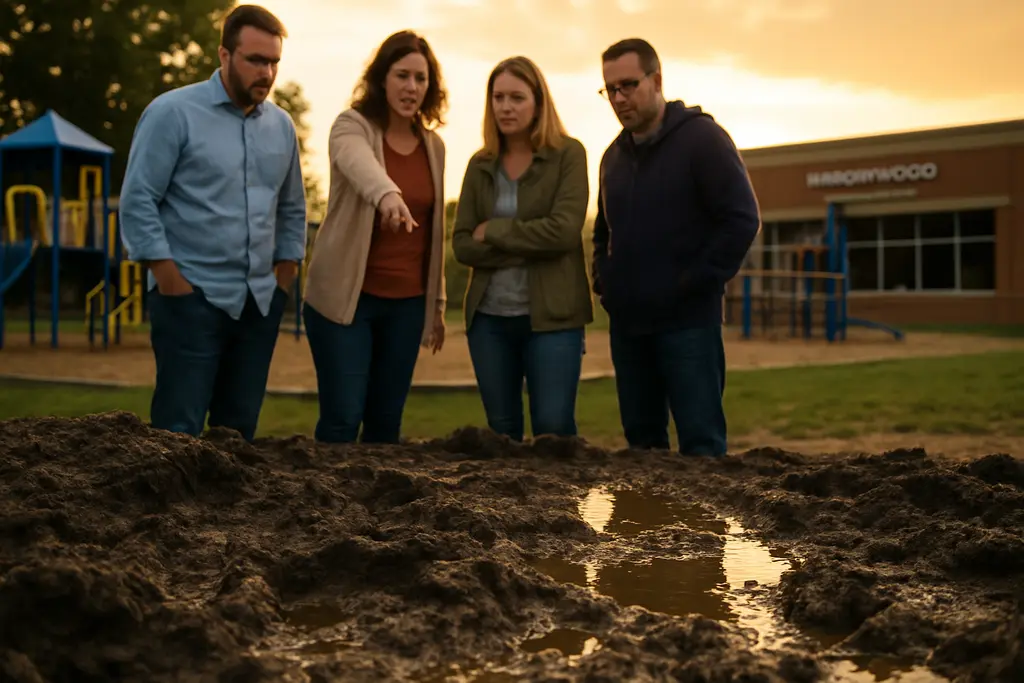
On April 15, 2026, severe storms caused major flooding at Arrowwood Elementary in Saginaw Township. Water inundated the courtyard and nearby classrooms, damaging teaching materials, furniture, and books. School was closed that day, and officials did not expect students to return before April 21, 2026, according to WNEM’s April 15 report.
The closure was not just a scheduling issue. A school building affected by floodwater needs cleanup before children and staff can return. The building, described in the reporting as about 65 years old, required cleaning, sanitization, air quality assessments, and restoration work. That means the immediate work centered on whether classrooms, shared spaces, and materials could be safely used again after water entered instructional areas.
Classes resumed on April 23, 2026, after a week of closures while crews worked on flooded areas. For families, that gap meant a sudden change in school routines. For staff, it meant lost classroom materials and the disruption of teaching spaces. For the district, it showed that stormwater problems at the site were not only a maintenance concern but a continuity-of-operations concern for an elementary school.
What The September Review Found
A September 29, 2026 investigation later identified tree-root intrusion in drainage system pipes as a contributing issue. The district also reported that the current drainage system is designed to handle about 3 to 4 inches of rainfall over a 24-hour period. When rainfall exceeds that level, water can build up around the building, with the courtyard called out as a particular trouble spot.
That finding matters because it points to two different pressures on the site. One is the condition of existing pipes, including obstruction from roots. The other is the capacity of the broader drainage layout during heavy rainfall. A pipe blockage can make a bad stormwater situation worse, but a drainage system with limited capacity can still leave the property exposed during larger rain events.
Safety And Building Impacts For Families
Classroom Conditions After Flooding
Flooding inside a school creates several practical concerns. Books, classroom furniture, teaching materials, and floor-level supplies can be damaged or become unusable. The research notes from the April incident identify damage to teaching materials, furniture, and books in areas affected by the water. That type of loss can affect instruction even after the building reopens because teachers may need to replace materials or adjust classroom setup.
The district’s response included sanitization and air quality assessments before reopening. Those steps are central to public confidence because families need to know that the building was not simply dried out, but checked before students returned. Arrowwood Elementary Drainage is tied directly to that confidence: if water can repeatedly enter classroom areas, residents will expect the district to show how future risk is being reduced.
Why Courtyard Drainage Matters
The courtyard is more than an outdoor feature. Based on the April flooding, water accumulation there affected adjacent classrooms. That makes the courtyard a building-protection issue. If heavy rain collects near doors, walls, or classroom edges, the risk is not limited to standing water outside; it can become an interior school operations problem.
The district is developing a long-term site drainage plan. Proposed solutions in the research notes include re-engineering parts of Arrowwood’s parking lot and adding a retention area to hold excess stormwater during heavy rains. Those ideas suggest a shift from temporary cleanup toward site-level changes that could slow, redirect, or store water before it reaches vulnerable areas.
Funding Questions For Arrowwood Elementary Drainage
The Failed May 2026 Bond Proposal
The May 5, 2026 bond proposal totaled $94.2 million and included about $9.5 million for upgrades at Arrowwood Elementary. Within that Arrowwood amount, roughly $100,000 was designated for courtyard drainage improvements. Voters rejected the proposal, so those bond-backed improvements did not move forward under that plan.
The school board later decided not to place another bond on the November 2026 ballot. As of October 16, 2026, that decision means the district must look to other funding sources or reallocate available resources if it wants to complete major infrastructure and safety work. The research notes indicate that the district has adjusted its project schedule to prioritize drainage improvements over other planned upgrades, including bathroom renovations, which would be delayed until funding and resources are reallocated.
That tradeoff is the core civic issue. Bathroom renovations, drainage work, and other building upgrades may all be valid needs, but the April closure gave drainage a more immediate school-safety and continuity dimension. For taxpayers and families, the question is not only whether repairs are needed, but which projects move first when a bond plan has failed and no November 2026 bond question is scheduled.
What Residents Can Watch Next
Residents can track three practical items as the district works through next steps:
- Whether the long-term site drainage plan includes both pipe repairs and added stormwater storage.
- How the district explains the delay of other projects while drainage work is prioritized.
- Which funding sources are identified after the failed May 2026 bond proposal and the decision not to seek a November 2026 bond vote.
Those details will help families understand whether the district is treating Arrowwood Elementary Drainage as a short-term repair, a site redesign, or a phased capital project. Readers tracking similar local infrastructure questions across Michigan can also find relevant news at County Watchers, a site with local insight.
Community Implications In Saginaw Township

Why This Is A Public Service Issue
Elementary schools are neighborhood public assets. When a building closes unexpectedly, families may need to change work schedules, transportation plans, childcare arrangements, or instructional support. The April 2026 closure lasted about a week, and while classes did resume, the incident showed how drainage and stormwater systems can affect daily public services.
For the district, the path forward will likely depend on how much work can be funded without a new bond vote, how quickly priority projects can be scheduled, and how clearly the district reports progress to families. The September findings about roots and system capacity give residents more detail than they had immediately after the flood, but they also raise clear follow-up questions about pipe maintenance, site engineering, and long-term resilience during heavier rain.
Community members do not need engineering drawings to understand the stakes. They need plain updates about what failed, what will be repaired, what will be redesigned, what work is delayed, and how the district will pay for it. That is the information that can turn a disruptive school closure into a more accountable facility planning process.
Arrowwood Elementary Drainage Next Steps
Key Questions For The District
As of October 16, 2026, the known path is that the district is prioritizing drainage improvements and working on a long-term site drainage plan. The supported options include re-engineering parts of the parking lot and adding a retention area for excess stormwater. The unresolved public questions are timing, cost, funding source, and how much of the work can be completed before another major rain event tests the site.
For families and staff, the most useful updates would identify the condition of the drainage pipes, the scope of any root removal or pipe replacement, the design goal for stormwater capacity, and the revised schedule for projects that were pushed back. Arrowwood Elementary Drainage will remain a community issue until residents can see how the district plans to reduce the chance of another classroom-level flood and how those repairs fit within the district’s limited capital funding options.