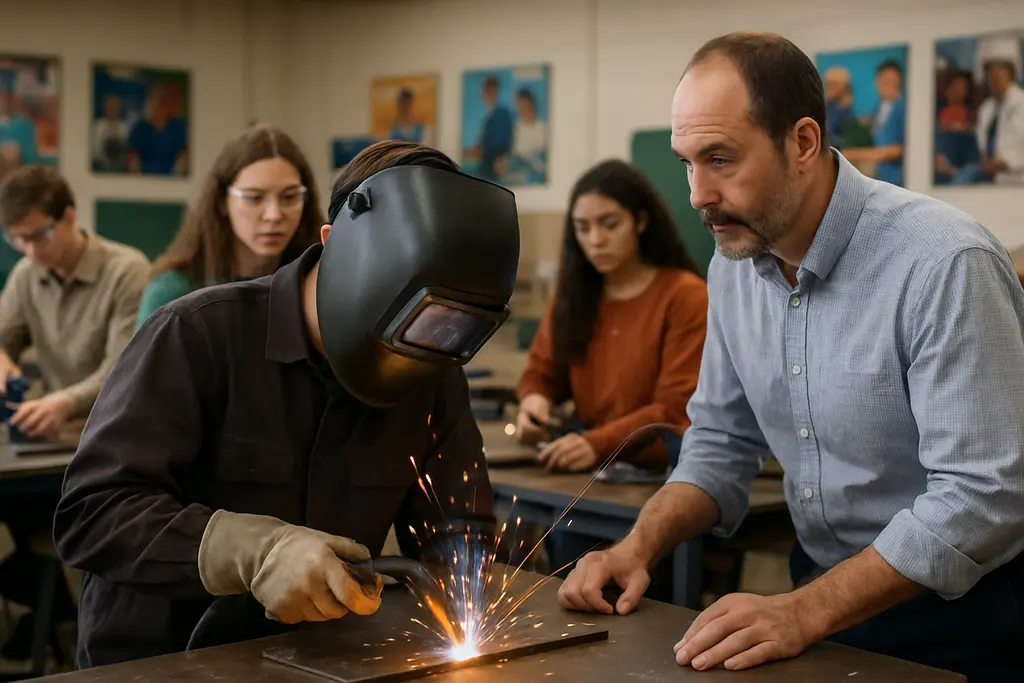
Michigan CTE Grants Reach Local Districts
Michigan CTE Grants announced on October 8, 2026, are sending nearly $44.7 million in additional state funding to local school districts for career and technical education expansion. The Michigan Department of Education said the awards are part of the Section 61v CTE Expansion Grant program and are intended to expand access in communities with limited CTE options and participation gaps, with funding spread over three years through awards beginning in 2026 MDE announcement.
What Michigan CTE Grants Changed
The October 8 award marked the second major CTE expansion announcement from the state in 2026. According to the Michigan Department of Education, the latest round adds nearly $44.7 million for 80 school districts. The department also reported that, when paired with an earlier April 2026 round, Michigan has committed about $68.5 million in CTE expansion grants during 2026.
For local districts, the change is not just the size of the award. It is the intent of the money. The Section 61v program is aimed at places the state identifies as CTE deserts, meaning communities with little or no existing access to state-approved career and technical education programs. It also targets districts where opportunity gaps have limited student participation or where local vocational millage support is not available.
The state described the second round as support for 229 new CTE programs. The announcement also said those programs reach 117 school districts, including 57 middle schools. Because the same state announcement refers to 80 awarded districts and also describes broader program reach, local boards, families, and employers should look at district-level award notices and program applications to confirm how each local program is being counted and scheduled.
Michigan CTE Grants By The Numbers
The grant structure allows up to $400,000 for each new CTE program. The money is meant to help districts plan, launch, and expand programs tied to high-wage, high-skill, in-demand occupations. The state’s examples include fields such as advanced manufacturing, construction trades, digital technologies, healthcare, business administration, agriculture, woodworking, and agricultural operations.
Two local examples in the state announcement show the range of the awards. Grand Rapids Public Schools received $487,810 in the second round for programs in agricultural operations, woodworking, and business administration or management. Mackinac Island Public Schools was awarded $133,100 to establish a new construction trades program, with the state pointing to travel and access issues during harsh winter months as part of the local need.
Why Access Matters For Students
Career and technical education access often depends on transportation, teacher availability, equipment, and whether a student’s district has a state-approved program nearby. The grant program is designed to reduce those barriers, especially in districts where students have had fewer local options. That matters in rural communities, island communities, and areas where sending students to another campus can be difficult during the school day.
The middle school reach is also worth watching. If local districts use the money to create earlier exposure to career pathways, students may have more time to connect coursework with programs in high school. The state has not provided student enrollment totals in the research available here, so the immediate impact should not be overstated. The supported fact is that the state plans to fund new programs and that some of them include middle school settings.
How Local Districts Can Use The Funding
The state’s grant design points to a phased start. Research from the state program materials says year one emphasizes planning work such as recruitment, teacher training or release time, course curriculum, and equipment setup. Full student instruction is expected after that planning stage. That means some families may not see a new class schedule immediately, even if their district is listed for an award.
For school boards, the first public questions are practical. Which building will host the program? What equipment is needed? Is a qualified instructor available? How will students reach the course if it is not in their home building? What happens when the three-year grant period ends? Those are local governance questions, not just education questions, because the answer can affect budgets, transportation plans, facilities, and partnerships with local employers.
Districts seeking approval for new CTE programs for the 2026-27 school year must follow the state’s application process. The new program application window opened on October 1, 2026, and closes on January 20, 2027, through the state CTE application system GEMS CTE portal.
Planning Before Students Enter A Lab
New CTE programs need more than a course title. A construction trades program may need space, safety procedures, materials, and equipment. A digital technology program may need updated devices and software. A healthcare pathway may require training spaces and local placement relationships. The research provided does not list every district’s approved equipment plan, so local reporting should stay close to board agendas and state application records as districts move from award notice to implementation.
The sustainability requirement is one of the most significant details for taxpayers. The Section 61v grants require a sustainability plan, and recurring costs such as salaries are expected to transition to ongoing district funds after the three-year grant period. That does not mean every program will face the same cost pressure, but it does mean boards will need to explain how they plan to keep programs operating after the state start-up money is spent.
Where Employers And Community Groups Fit
Employers are not named as grant recipients in the research provided, but their local input can still shape whether a program matches workforce needs. A district that adds business administration, agriculture, construction, or manufacturing coursework may need advisory support, work-based learning connections, or equipment insight from nearby employers. That is where chambers, trade groups, and school advisory committees can help connect classroom planning with local job conditions.
Residents who follow workforce and small-business issues can network for district CTE plans and compare them through local organizations like the Richland Area Chamber. For broader school funding context, the state’s CTE awards sit alongside continuing local attention to the FY 2027 education budget, including staffing, transportation, meals, and planning decisions that affect district operations.
Questions For Boards And Families

Families should expect district-specific answers, not a single statewide timeline. A district may receive funding in 2026 but spend the first stage on instructor recruitment, curriculum, and equipment. Another district may already have staff or space that lets it move faster. The public record to watch is the local school board agenda, because that is where purchases, staffing changes, course approvals, and transportation adjustments are likely to surface.
Boards should be clear about whether a new program is meant to serve only high school students, include middle school exposure, or connect both age groups. They should also explain whether students from nearby districts can participate, especially in places where access gaps are part of the grant rationale. The state award identifies the broad purpose, but the local implementation will determine how useful the program is to students.
- Ask which specific CTE program or programs the district will launch with the award.
- Ask when students can enroll and whether instruction begins after a planning year.
- Ask how the district will pay recurring costs after the three-year grant period.
- Ask whether transportation, equipment, or staffing could limit student access.
Clear answers will help residents judge whether the grants are widening opportunity or simply adding programs that are difficult for students to reach. The state funding creates the opening. Local planning will decide whether the new programs become practical pathways.
Michigan CTE Grants And Local Accountability
For local districts, Michigan CTE Grants are both an opportunity and a public commitment. The opportunity is access to new or expanded career programs in communities that the state says have been underserved by existing CTE options. The commitment is the obligation to turn short-term state aid into programs with clear staffing, course design, safety planning, transportation access, and long-term funding.
The most useful next civic step is local verification. Residents should ask their district whether it received an award, what program the money supports, when the board will act on related staffing or purchases, and how the district will report progress. The state has made a large award. The community impact will be measured building by building, class by class, and budget vote by budget vote.