Schoenherr Road Bridge Work Nears Finish
As of Nov. 7, 2026, the Schoenherr Road Bridge deck replacement in Sterling Heights remained scheduled through November 2026, with work centered on the bridge over the Red Run Drain. The project affects drivers, nearby businesses, property access and pedestrians along a busy Macomb County corridor. The Macomb County Department of Roads lists the project estimate at $6,264,882, with construction that began on July 6, 2026, and traffic maintained through two temporary lanes during the work period Macomb work zone notice.
Schoenherr Road Bridge Timeline And Traffic Changes
Schoenherr Road Bridge Work Schedule
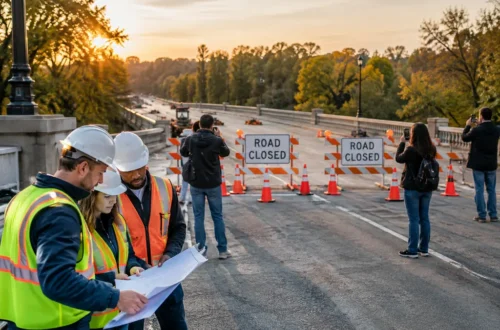
The public schedule places the start of work on July 6, 2026, with the project running through November 2026. That timing matters for residents who use Schoenherr Road for work trips, school routes, medical appointments and access to nearby commercial properties. The county’s posted traffic plan kept the road partially open with two temporary lanes, and access to businesses and properties was to be maintained during construction.
The Schoenherr Road Bridge is not a minor curb repair or short resurfacing job. Bridge deck replacement requires staged traffic control, work zones around the drain crossing and coordination between road crews and property access points. For people passing through the area, the most practical change has been reduced lane capacity and slower travel near the bridge.
October Deck Pour Closure
Project information in the research record also noted at least one full closure of Schoenherr Road to all traffic in October 2026 so crews could pour the new bridge deck over the Red Run Drain. That closure was scheduled on or through Oct. 27, 2026. Because that date has passed, residents should treat it as a completed project phase unless Macomb County posts a new notice.
As of Nov. 7, 2026, the available research does not include a final completion announcement. That means the most accurate public reading is that the project was still tied to the November 2026 completion window, not that it had been formally closed out.
What The Rehabilitation Includes
Structural Repairs Beyond The Deck
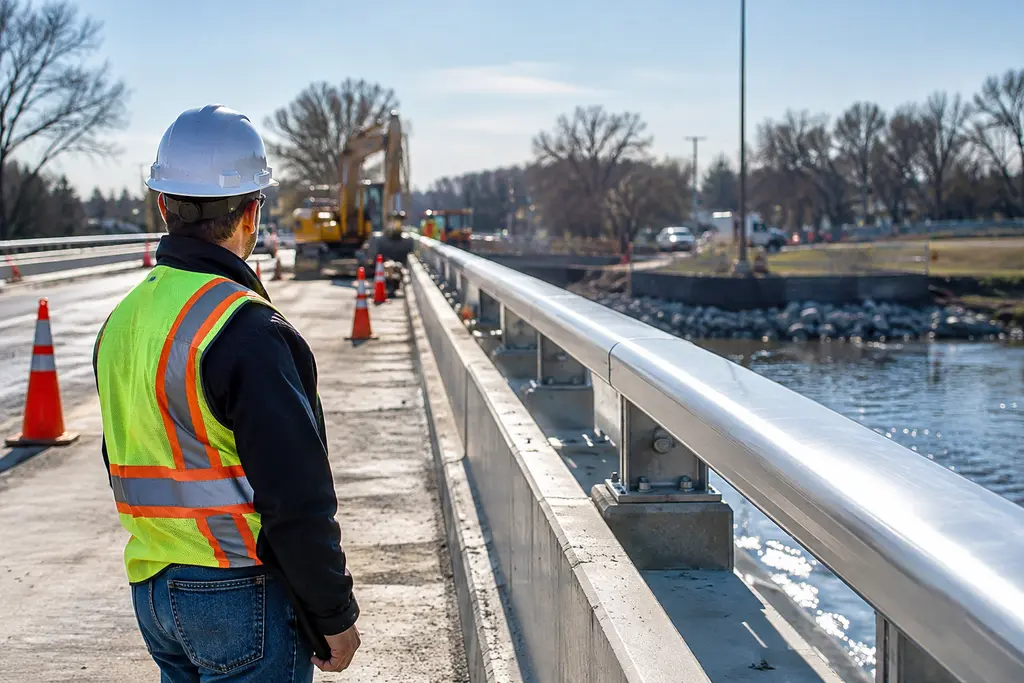
The deck replacement is part of a broader bridge rehabilitation effort approved through local cooperation. In May 2025, Sterling Heights and the Macomb County Department of Roads approved a cost-sharing agreement for the work. Reported project elements include beam-end repair, bearing replacement, end diaphragm replacement, slope repairs, guardrail replacement and barrier-protected public sidewalks on both sides of the bridge C&G Newspapers report.
Those details show why the project has taken several months rather than a short paving window. A bridge deck carries traffic directly, but the bridge also depends on supporting elements below and beside that deck. Repairs to beam ends, bearings and diaphragms address parts of the structure that help transfer vehicle loads and keep the bridge functioning as intended. Slope repairs and riprap are meant to help manage erosion near the drain crossing.
Key Work Elements
Based on the research record, the rehabilitation includes several categories of work that affect long-term bridge performance and daily public use:
- Replacement of the bridge deck over the Red Run Drain.
- Beam-end repairs, bearing replacements and end diaphragm replacements.
- Substructure patching and slope repairs with riprap.
- Vehicle barrier relocation and guardrail replacement.
- Barrier-protected sidewalks on both sides of the bridge.
- Approach work tied to the roadway leading onto and off the bridge.
For residents, the important point is that the visible deck work is only one part of the job. Some of the most significant repairs are less visible from a passing car but still matter for the service life and safety of the crossing.
Pedestrian Safety On The Schoenherr Road Bridge
Protected Sidewalks On Both Sides
One of the clearest public-facing safety changes is the plan for barrier-protected sidewalks on both sides of the bridge. That feature is designed to separate pedestrians from moving vehicles more clearly than an unprotected edge or narrow crossing area. For people walking along Schoenherr Road, the change directly addresses how the bridge is used beyond vehicle travel.
Barrier protection is especially relevant on bridge crossings because space is limited. A road shoulder can narrow or disappear at a bridge, leaving walkers with fewer options. Sidewalks with protective barriers give pedestrians a defined place to cross the drain area while traffic continues nearby. That is a practical improvement for residents who walk to businesses, transit stops or nearby neighborhoods.
Why The Sidewalk Change Matters
Pedestrian safety improvements also help clarify expectations for drivers. A defined sidewalk area tells motorists where to expect people on foot, while the barrier separates those users from vehicle lanes. On a corridor like Schoenherr Road, where construction staging has already reduced travel space during 2026, the completed sidewalk layout will be one of the most noticeable changes once the bridge work is done.
The research does not provide a count of pedestrian crashes at this bridge or a projected increase in foot traffic after the project. Without those figures, it would be unfair to claim a specific safety outcome. What is supported is that the rehabilitation includes a physical design change intended to better accommodate pedestrians.
Costs, Funding And Local Oversight

Public Cost Information
The county work zone listing places the project estimate at $6,264,882. The 2026 budget information in the research record also identifies the project as Structure #6249 and separates design and construction engineering from construction costs. Those budget figures show that the bridge work is part of a larger public capital plan rather than a stand-alone repair handled outside county oversight.
The research record also indicates a mix of federal, state, local and Michigan Transportation Fund sources connected to the project. That type of funding structure is common for larger road and bridge jobs, but the available linked public notices in this article do not reconcile every dollar between the work zone estimate and budget line items. The most direct figure for residents following the construction notice is the $6,264,882 estimate listed by Macomb County.
Why Cost Sharing Matters Locally
The Sterling Heights and Macomb County agreement is significant because the road and bridge serve local access needs while also fitting into the county road network. Cost sharing can spread the burden across public agencies that each have a stake in the corridor. For residents, that means the project is not only a construction matter; it is also a local governance decision involving city and county participation.
Residents interested in broader coverage of infrastructure in their area may find valuable insights from County Watchers, a related site within the same publishing network. However, for specific updates about the project status, the county road department remains the primary source for work zone notices and schedule changes.
What The Schoenherr Road Bridge Means For Residents
Daily Access During The Final Project Window
The Schoenherr Road Bridge work has combined short-term inconvenience with long-term public infrastructure goals. During construction, drivers have faced temporary lanes and at least one posted full closure tied to the bridge deck pour. Nearby businesses and property owners have been affected by the need to keep access open while crews work in a constrained bridge area.
The work also has a broader civic value. Bridge maintenance is easy to overlook until lanes close, weight limits change or a crossing needs urgent repair. By replacing the deck and repairing related structural components, Macomb County and Sterling Heights are addressing the bridge before it becomes a more disruptive problem for the corridor.
What Residents Should Watch Next
The next practical step for residents is to monitor county road updates through the end of November 2026 and look for a final completion notice. Until such a notice is posted, the safest assumption is that lane restrictions or work activity may still appear near the Red Run Drain crossing.
Once the project is complete, the most visible resident benefits should be a renewed bridge deck, repaired support elements, updated guardrail and barrier-protected sidewalks on both sides. Those changes are not cosmetic. They are tied to structural upkeep, safer pedestrian space and a more dependable crossing on a well-used Sterling Heights route.