West Michigan Development Through Shoreline Work
What WMSRDC Means For West Michigan Development
West Michigan Development Across Five Counties
West Michigan Development is often discussed through projects residents can see, such as road work, lake restoration, recycling planning, or broadband service. Behind many of those efforts is the West Michigan Shoreline Regional Development Commission, known as WMSRDC. The commission is a federally and state-designated regional planning and development agency serving 120 local governments in Lake, Mason, Muskegon, Newaygo, and Oceana counties, according to WMSRDC’s agency overview. That regional scale matters because transportation routes, watersheds, labor needs, internet access, and waste systems do not stop at city or township lines.
The commission’s work gives local governments a shared planning structure. A small township, a county road agency, a city government, and a regional transit or environmental partner may each have separate authority, but many funding programs ask for regional priorities. WMSRDC’s role is to gather local input, organize plans, and connect community needs to state and federal programs where eligible. For residents, that means the agency is less about a single building or one public event and more about the planning framework behind many local decisions.
Economic Development District Status
One of the core pieces of WMSRDC’s economic work is its Economic Development District designation. The commission has maintained that designation since 1975 through the U.S. Department of Commerce’s Economic Development Administration. In practical terms, the designation helps the five-county region stay aligned with federal economic planning requirements. It also ties the region to the Comprehensive Economic Development Strategy, or CEDS, which WMSRDC prepares for its service area.
The CEDS is a planning document, not a ribbon-cutting announcement. Its value is in setting regional priorities before a grant deadline or emergency need arrives. The research notes provided for this story state that the strategy supports economic prosperity and resilience while helping maintain the region’s EDD status and eligibility for federal assistance. For local officials, that can make the difference between reacting to a funding notice and having a documented regional priority ready for review.
Planning Areas Residents Will Notice
Transportation And WestPlan MPO Work
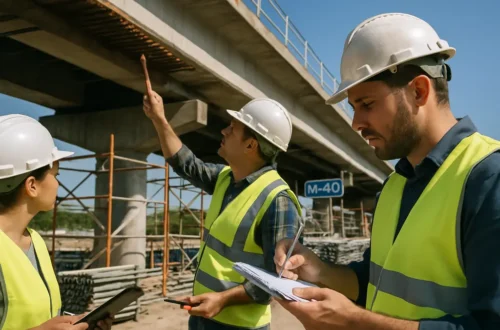
For many households, regional planning is most visible on the road. WMSRDC serves as the Metropolitan Planning Organization for Muskegon and Northern Ottawa counties and administers the WestPlan MPO. Research notes state that WestPlan invests more than $19 million annually in federal funds for state and local transportation projects. That figure matters because MPO planning helps shape how federal transportation dollars move from broad programs into specific corridors, bridges, intersections, and other improvements.
Residents may not always connect a road project to a regional planning body, but the connection can be direct. MPO processes often involve project lists, public comment, coordination among road agencies, and long-range transportation plans. In Muskegon and Northern Ottawa counties, WMSRDC’s transportation function is one point where city, county, state, and federal priorities meet. For West Michigan Development, transportation planning is not only about traffic flow; it affects freight movement, job access, emergency response routes, and the cost of maintaining public infrastructure.
Environmental Restoration And Lake Planning
The shoreline region also has a major environmental planning story. Research notes state that more than $80 million was invested in the Muskegon Lake Area of Concern and that the area was officially delisted in October 2025. The same notes state that WMSRDC administered about $35 million in state and federal grants connected to that work. Those figures point to a long public process involving restoration, funding management, and coordination among agencies.
Environmental restoration is often measured in technical milestones, but the local effect is broader. Lake conditions influence public access, waterfront planning, habitat work, recreation, and how nearby neighborhoods connect to the water. The Muskegon Lake example also shows why regional agencies matter: no single local office can easily manage every part of a multi-year restoration effort. Grant administration, partner coordination, and public communication all become part of the work.
Materials, Broadband, Trails, And Air Quality
WMSRDC’s work also reaches areas that can feel separate to residents but are linked through county and regional planning. Research notes identify active materials management planning tied to waste management and recycling. That is a practical issue for households, haulers, local governments, and businesses because collection systems, recycling options, and disposal planning depend on coordination across jurisdictions.
Broadband support is another regional issue. WMSRDC supports broadband expansion projects intended to improve internet access in underserved areas, according to the research notes. While local residents may experience broadband as a household service question, regional planning can help identify gaps, match projects with funding opportunities, and support applications where public agencies are involved.
The commission also participates in the Lake Michigan Water Trail Plan with a four-state Lake Michigan Trail Network. The research notes describe that work as part of a 1,600-mile continuous loop non-motorized water trail around Lake Michigan. This is not only a recreation item. Water access planning also touches signage, safety planning, public launches, local zoning, and coordination with shoreline communities.
Air quality outreach is another public-facing program. Through the Clean Air Action Program and the West Michigan Clean Air Coalition, research notes state that 91 percent of surveyed residents were aware of Clean Air Action Days. Awareness does not solve air quality concerns by itself, but it helps public agencies communicate when residents and employers may need to adjust routines.
Governance And Public Accountability
Leadership Ties To State Infrastructure Work
WMSRDC’s leadership also connects to statewide infrastructure planning. Erin Kuhn, WMSRDC’s executive director since 2014, serves as vice-chairperson of the Michigan Infrastructure Council, with a governor-appointed term expiring Dec. 31, 2027, according to the Michigan Infrastructure Council profile. That statewide role is relevant because infrastructure planning often requires coordination among water, transportation, energy, broadband, and local government systems.
For local readers, the governance question is not only who holds a title. It is whether regional plans are understandable, whether local governments know how to use them, and whether residents can see how priorities are set. WMSRDC’s quarterly newsletter, distributed to more than 500 recipients according to the research notes, is one way the commission communicates with local governments and residents about current initiatives.
Why Regional Coordination Matters
Regional agencies can be easy to overlook because they often work between the level of a city council meeting and a state department announcement. Yet their planning work can shape what projects are ready, which communities coordinate, and how local needs are described to funding agencies. For West Michigan Development, that middle layer is significant because Lake, Mason, Muskegon, Newaygo, and Oceana counties include different population centers, rural areas, shoreline assets, and infrastructure needs.
Local leaders preparing for regional meetings may find value in checking labor, water, transportation, and civic follow-up items before priorities are set. One related local planning resource is this report on regional prosperity summit preparation, which focuses on how local leaders can organize questions before a meeting. To gain further insights into statewide county-level public service initiatives, residents might consider following County Watchers.
West Michigan Development Questions For Residents
Public Follow-Up Points
Residents do not need to read every planning document to ask useful questions. The most practical step is to connect regional topics to a local board, county commission, road agency, planning commission, or public works office. If a project affects a road, lake, recycling system, broadband access area, or public facility, residents can ask how the local government is coordinating with WMSRDC or other regional partners.
- Which local projects are included in current regional transportation or economic planning documents?
- How does a city, township, or county submit priorities for regional review?
- What public comment points are available before a project list or strategy is adopted?
- How are environmental restoration, materials management, and broadband needs being shared across county lines?
The clearest civic value of WMSRDC’s work is that it creates a shared place for regional priorities to be organized before funding and policy choices are made. West Michigan Development depends on that kind of coordination because the shoreline economy, road network, environmental systems, and communications infrastructure are connected across many local boundaries. Residents who follow those links can better understand why a county planning item, a transportation project, or a lake restoration update may affect more than one community.