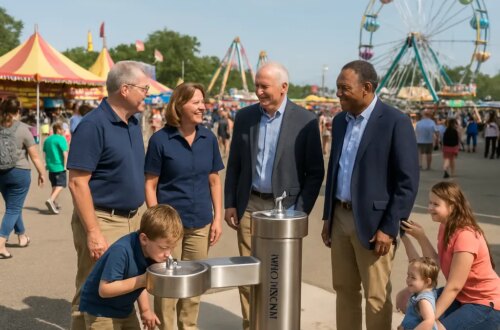
West Michigan Shoreline Commission Impact in 2026
West Michigan Shoreline work has had a measurable effect across Lake, Mason, Muskegon, Newaygo, and Oceana counties by August 21, 2026, especially in transportation planning, environmental restoration, materials management, and intergovernmental coordination. The regional agency at the center of that work, the West Michigan Shoreline Regional Development Commission, has become a shared planning table for counties, cities, villages, townships, and public partners that often face the same infrastructure and environmental questions across local borders.
The record is best understood through specific public actions and dated outcomes rather than broad claims. WMSRDC serves 120 local governments across the five-county region, and in fiscal year 2022 its Metropolitan Planning Organization program administered more than $87 million in highway and transit projects using federal, state, and local funds, according to WMSRDC. Those figures show why the agency matters to residents who may never attend a regional meeting but use the roads, transit systems, public spaces, lakefront areas, and waste systems shaped by those decisions.
West Michigan Shoreline Planning Footprint
West Michigan Shoreline Regional Impact
The five counties in the commission’s service area are linked by transportation corridors, shoreline concerns, watershed issues, housing and workforce needs, and public service costs. That West Michigan Shoreline footprint gives local governments a way to coordinate on issues that do not stop at municipal boundaries. A road project in one county may affect regional freight movement or access to jobs. A watershed restoration project may support recreation, property values, public health, and redevelopment in more than one jurisdiction.
For residents, the main point is practical: regional planning can help smaller governments compete for state and federal resources they may not be able to pursue alone. The research provided for this report identifies WMSRDC’s service to 120 local governments as a central part of its structure. That wide membership means county boards, city councils, village offices, township officials, transit partners, and planning staff can use a common forum for grant planning and project sequencing.
Counties And Local Governments Served
The commission’s service area includes Lake, Mason, Muskegon, Newaygo, and Oceana counties. Each county has different land use patterns and public service needs, but the shared planning structure gives local officials a place to align decisions on transportation, environmental cleanup, economic development, and materials management. This matters in West Michigan because many public investments require matching funds, grant readiness, interlocal support, or proof that a project fits a regional plan.
Related coverage of West Michigan development through shoreline work has also focused on how regional coordination connects planning, transportation, grants, materials management, and public outreach. That connection is central to understanding why WMSRDC’s work is not limited to one office or one project list.
Transportation And Materials Planning
Highway And Transit Project Administration
Transportation planning is one of the clearest ways residents see regional coordination, even if the agency name is not visible on a road sign. In fiscal year 2022, WMSRDC’s MPO program administered more than $87 million in highway and transit projects using a mix of federal, state, and local funds. That amount reflects project administration, not a single construction site, and it points to the scale of coordination required among local road agencies, transit providers, state transportation offices, and communities affected by route changes or construction schedules.
For people commuting to work, moving goods, reaching medical care, or using transit, these planning decisions affect daily routines. Regional transportation planning can help set priorities, identify funding sources, and connect local needs to state and federal programs. It also gives public officials a documented process for choosing projects, which can help residents track why certain roads, bridges, or transit improvements move forward before others.
Materials Management Designation
The supplied research states that by Summer 2024, Lake, Mason, Muskegon, Newaygo, and Oceana counties had passed resolutions designating WMSRDC as their Designated Planning Agency for Materials Management Planning. That designation matters because materials management planning affects waste reduction, recycling systems, disposal capacity, local costs, and the public education needed to make programs work.
For county governments, a shared planning agency can reduce duplication and keep the five-county region working from a common framework. For residents and businesses, the effect is likely to be seen through future county-level planning documents, local program updates, and changes in how communities discuss recycling, organics, landfill capacity, and other materials management options. The key civic step is for residents to check county board agendas, posted resolutions, and WMSRDC planning notices when materials management updates are brought forward for review.
Muskegon Lake Restoration Results

Area Of Concern Delisting
Muskegon Lake provides the strongest dated example of long-term regional environmental work producing a public result. The lake was officially delisted as a Great Lakes Area of Concern effective September 26, 2025, after being first designated in 1987. The Michigan Department of Environment, Great Lakes, and Energy reported that restoration work addressed wetland, shoreline, contaminated sediment, and former industrial impacts, and cited a Grand Valley State University study projecting nearly an $8 million increase in local home values and a $28 million per year boost to the recreation economy tied to restoration outcomes Michigan EGLE.
Because the delisting occurred before August 21, 2026, it should be discussed as a completed milestone, not an upcoming event. The public value is not only symbolic. The research notes describe decades of cleanup and habitat restoration along Muskegon Lake and the lower Muskegon River watershed, including more than $30 million in natural fish and wildlife habitat restoration from 2009 through 2020 funded by the Great Lakes Restoration Initiative and the American Recovery and Reinvestment Act.
Restoration Work And Local Economic Measures
The Muskegon Lake work connected environmental repair with local economic indicators. The supplied research states that more than $84 million was invested in remediation and restoration, with WMSRDC administering about $35 million in state and federal grants. It also states that, as part of the delisting process, WMSRDC and partners completed seven habitat restoration projects using nearly $38 million from the Great Lakes Restoration Initiative. Those projects covered about 134 acres of habitat, including close to 100 acres of open water and emergent wetlands, and removed major volumes of sawmill debris and contaminated sediment.
Those numbers are significant for Muskegon-area residents because cleanup work can influence waterfront reuse, public access, fisheries, recreation, and nearby property conditions. The research also cites post-restoration indicators including a 19 percent increase in marina customers and a 45 percent rise in county hotel room tax collections in the Muskegon area. Those measures should not be read as the result of one project alone, but they do show why local governments and business groups often track environmental restoration alongside recreation and economic development data.
West Michigan Shoreline Civic Takeaways
What Residents Can Track Next
The West Michigan Shoreline record shows that regional work is most useful when residents can connect agency actions to visible public outcomes. In this case, the clearest examples are the five-county planning structure, fiscal year 2022 highway and transit project administration, Summer 2024 materials management designations, and the September 26, 2025 Muskegon Lake Area of Concern delisting. Each of those items involved public agencies, dated actions, and measurable outcomes.
Residents who want to follow the next steps should watch county board agendas, transportation planning notices, WMSRDC meeting materials, and public comment opportunities tied to materials management and infrastructure funding. Local officials should keep explaining how regional projects affect costs, services, and access in plain language. For a different view on how regional networks function in practice, Saint Joseph Detroit is a related site in the same network offering a wealth of resources.
Why The Commission’s Work Matters Locally
The commission’s impact is not about a single headline. It is about the steady work of aligning public dollars, environmental goals, local government needs, and long-term planning across five counties. When those efforts are documented and open to public review, residents have a better chance to understand how regional decisions affect roads, transit, waterways, waste systems, recreation, and economic development close to home.